Near the historic district, garages are older and the driveways are steep enough that water runs toward the door in a hard rain. Local pros want to know if the slab gets wet from outside. Newer Roswell bays are larger and mainly need a flake floor that handles clay and daily cars.
A basement or terrace level that opens downhill can be a good coated room if it is dry. If it weeps after rain, the coating is not the first trade to call.
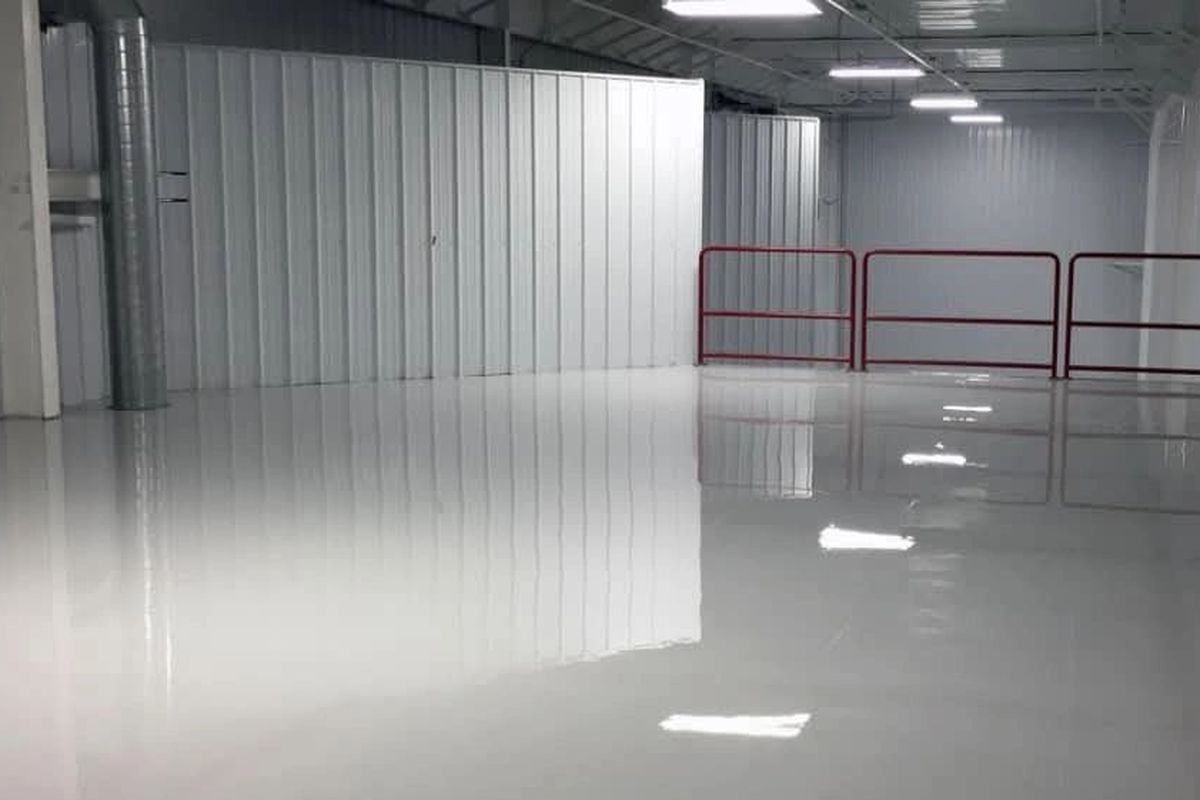
The photo is an example finish, not a documented Roswell job.
Roswell’s mix of older and newer concrete calls for checking the slab, not just judging its surface. A floor can appear dry and still release moisture vapor through the concrete. That vapor can weaken adhesion or cause blisters beneath a coating. Ask how the installer will assess moisture and whether the slab’s condition could change after rain or seasonal weather shifts.
Calcium chloride testing measures moisture leaving the slab surface over a set period. In-situ relative humidity testing uses probes inside the concrete to assess moisture below the surface. These tests provide different information, and neither is a substitute for looking for active water entry. Ask which method fits the slab and how the results affect the proposed coating system.
If water is entering through a wall, doorway, or crack, coating over it can hide the symptom without fixing the cause. The floor may need drainage or water-management work before coating is considered. Ask the contractor to identify visible concerns, explain the limits of the inspection, and recommend a separate evaluation when the source of moisture is unclear.
Mechanical diamond grinding removes weak surface material and creates a consistent profile for bonding. Acid etching is less predictable because it may not remove existing coatings or contaminants evenly. Ask what concrete surface profile, or CSP, the system requires and how the crew will verify it. Dust control matters too; leftover grinding dust can interfere with adhesion.
Cracks and control joints need different decisions. A crack may be cleaned and repaired, but a repair cannot guarantee that a moving crack will stay invisible. Control joints are designed to accommodate movement and are often kept visible through the coating. Ask which locations will be repaired, which will remain, and whether the plan includes a compatible primer before the base coat.
For a garage with daily vehicle traffic, ask how the base coat, flake broadcast, and top coat work together against tire wear and cleaning. Polyaspartic and polyurea top coats can offer faster return to service than some epoxy systems, but the installer must follow product temperature, humidity, cure, and recoat limits. If sunlight reaches the floor, ask about UV stability and possible ambering; request a finish sample and slip-resistance options.
It should give the installer information about moisture in or leaving the slab, so the system can be chosen with that condition in mind. Ask for the test method and results, and what they mean for this floor. A test does not locate every water leak or replace checking for active entry.
Grinding removes weak concrete and surface residue while creating a profile for the coating to bond to. The amount of grinding depends on the slab and any existing finish. Ask how the crew will confirm the surface is ready and control dust before applying primer or coating.
A coating can change how cracks look, but it cannot stop concrete movement. Repaired cracks may show again if they move, and control joints often need to remain functional and visible. Ask the contractor to mark these areas and explain the treatment for each before work begins.
The answer depends on the system, site conditions, and the manufacturer’s cure requirements. Foot traffic may be allowed before vehicle traffic, but the times are not interchangeable. Get written guidance for walking, moving items, and parking, and follow it even if the surface feels dry.
Use a soft broom or dust mop for grit, then wash with a cleaner approved for the coating and rinse away residue. Avoid assuming that a glossy surface is safe when wet. Ask what cleaning products and tools suit the chosen finish and whether added texture changes maintenance.
Tell us about the floor in Roswell. A photo and a rough size are enough to start a written estimate. No street address on our side — local pros come to the slab.
Atlanta Epoxy Floors is an independent referral service that connects you with local epoxy flooring pros.
 ATLANTA