Decatur garages may be one car and a century of use. The coating is still worth it if you actually park there, because the bare slab dusts into the rest of the house. Access on a narrow street is part of the plan.
Basements and garden levels are the other Decatur job. They get a moisture test before anyone picks a metallic swirl. A dry one is a great room. A wet one is a water problem with a decorative disguise.
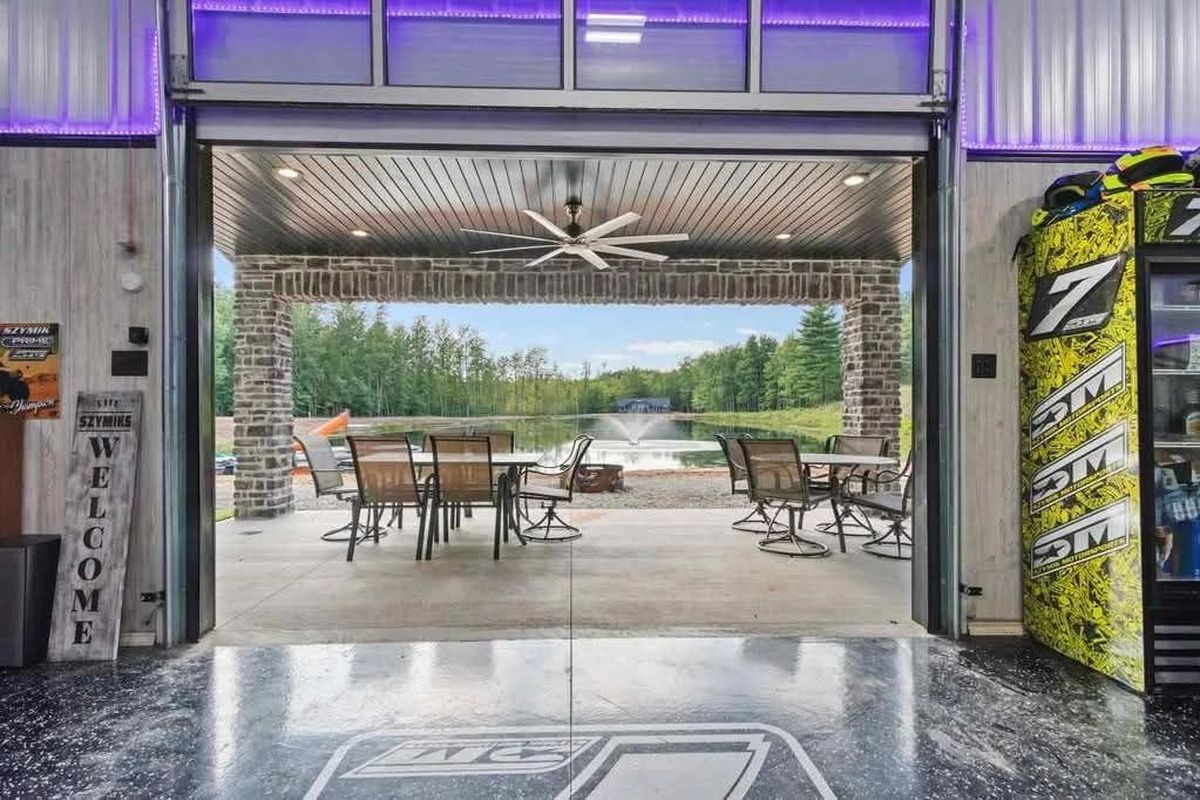
The photo is an example finish, not a documented Decatur job.
A garage slab that has seen decades of parking, storage, and repairs may have several surface conditions in one room. Soft patches, paint, oil, and old sealers can keep a coating from bonding. A careful inspection checks for weak concrete and contamination before the floor is ground. Coating over a sound-looking but poorly bonded layer can mean removing the whole system later.
Diamond grinding removes weak surface material and gives the coating a mechanical profile. The installer should be able to explain the target concrete surface profile, or CSP, for the system being applied. Acid etching is not an equal substitute: it may not remove coatings or contamination, and it does not reliably create an even profile across a varied slab.
Cracks and control joints need separate decisions. A stable crack may be repaired with a compatible material after the cause and movement are considered. Control joints are intended to accommodate concrete movement, so filling them rigidly and coating straight across can lead to a visible crack or failure. Ask which joints will remain visible and how each repair will be treated.
Decatur basement and garden-level floors start with moisture
Moisture vapor can move through concrete even when the surface looks dry. Depending on the coating maker’s requirements, an evaluation may use calcium chloride testing for surface emission or in-slab relative humidity probes. These methods measure different things. The written results should be compared with the chosen system’s stated limits, not treated as a universal pass or fail.
If readings are outside the coating’s limits, applying a decorative layer does not solve the source of moisture. The next step is to understand the conditions and discuss a suitable mitigation system or another floor finish. A primer may help with adhesion or be part of a specified moisture-control system, but ordinary primer should not be presented as a fix for every damp slab.
For a dry basement, a complete coating typically involves prepared concrete, any specified primer, a base coat, and the selected finish layer. Flake broadcast adds texture; the final clear coat affects cleanability and traction. In a garage, ask about hot-tire pickup and the allowed return-to-service time. In a basement, confirm ventilation, odor considerations, and cure conditions before scheduling furniture or foot traffic.
Discuss the route from the work area to the street before scheduling. The crew may need room to bring in grinding equipment, manage dust collection, and move materials without blocking the work. Confirm where vehicles and stored items can go, and ask how dust and debris will be contained.
Not automatically. Control joints are made to accommodate movement, and a rigid coating spanning them can crack as the slab moves. A contractor should identify the joints, explain whether they will be left visible or treated with a compatible flexible detail, and describe how that choice affects the finished appearance.
A UV-stable topcoat can reduce color change in the layers beneath it, but it does not make every system immune to sunlight or prevent all ambering. Ask which layer may change color, what exposure the coating is suited for, and whether the topcoat is included in the written system.
Ask for separate times for light foot traffic, moving items back, and parking vehicles. These depend on the products, slab temperature, and humidity during installation. Also ask about recoat windows: if a layer sits too long before the next coat, extra preparation may be required for a reliable bond.
Texture can be adjusted with the flake and topcoat choices, but more texture can make cleaning harder. Ask to see or feel a sample with the proposed finish and discuss wet-shoe traction for the room. Avoid assuming that a glossy surface or a heavier broadcast alone guarantees safe footing.
Tell us about the floor in Decatur. A photo and a rough size are enough to start a written estimate. No street address on our side — local pros come to the slab.
Atlanta Epoxy Floors is an independent referral service that connects you with local epoxy flooring pros.
 ATLANTA