Dunwoody’s 1970s houses often have a garage with failed paint and a lower level someone is tired of looking at. Flake for the cars. A tested, dry lower level can take solid color or metallic.
Perimeter traffic means local pros schedule the visit on purpose. A moisture problem does not care that the office park next door is convenient. The slab still gets the test.
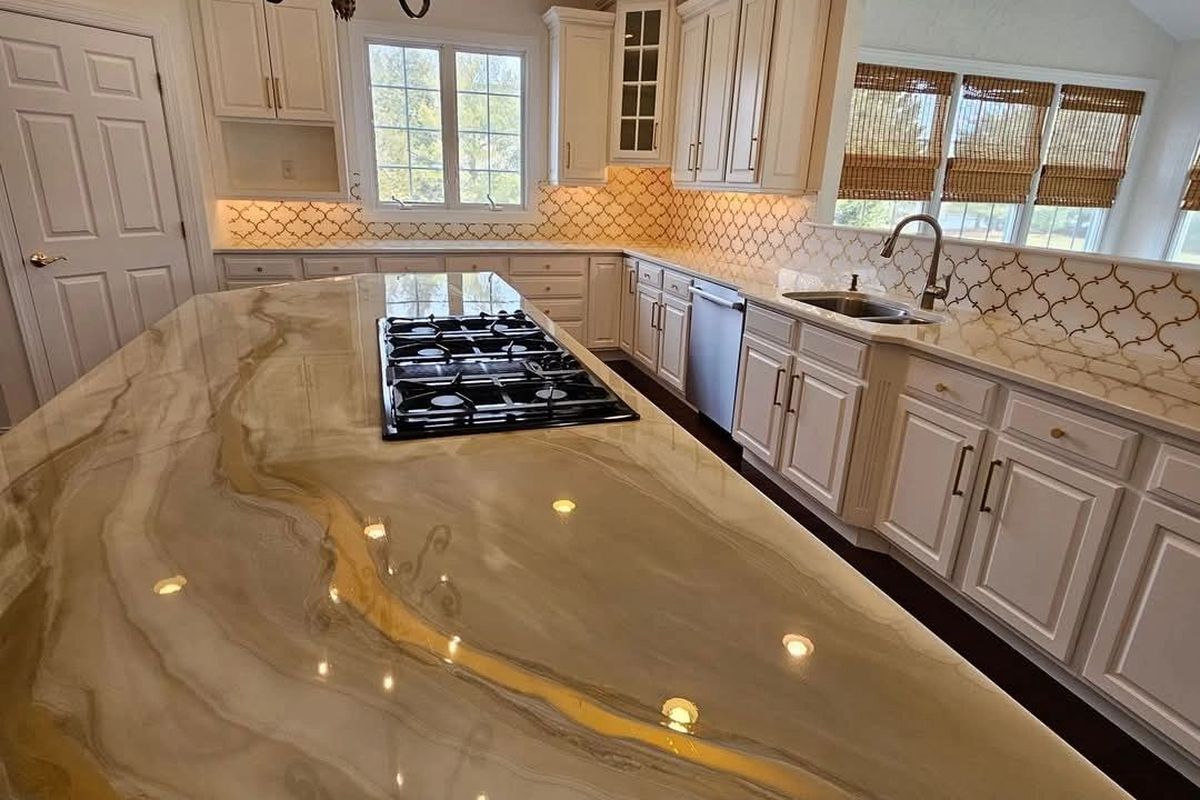
The photo is an example finish, not a documented Dunwoody job.
In an older garage, failed paint can hide more than a color problem. Grinding removes loose coating and opens the concrete so a new system can bond. Acid etching is less reliable on painted or contaminated slabs and does not create the same controlled profile. Ask how the installer will verify the concrete’s surface profile, often described by a CSP range, before applying anything.
Cracks and control joints need separate decisions. A stable crack may be repaired with a compatible filler after the slab is prepared, but an active joint can move as the concrete changes temperature or load. Filling every joint rigidly can lead to a visible split through the coating. The plan should say which openings will be repaired, which will remain, and how edges will be finished.
A coating is a sequence, not a single bucket of material. Depending on the system and slab, the installer may use a primer, a colored base coat, a full flake broadcast, and a protective top coat. Each layer needs suitable conditions and adhesion to the one below. Ask what happens if grinding exposes a weak patch or repair work takes longer than expected.
A lower level should not be coated just because its concrete looks dry on the day of a visit. Moisture vapor can move through a slab and cause bubbling or loss of bond. Calcium chloride testing estimates moisture emission at the surface; in-situ relative humidity testing measures conditions inside the concrete. The contractor should explain which test fits the project and what the results mean for the proposed system.
Use the room’s purpose to guide the finish. A basement used for storage may call for a different appearance and texture than one where people walk in socks or move furniture. A garage faces hot tires, grit, and vehicle traffic. A work area near frequent foot traffic needs a top coat and slip resistance suited to that use, not simply a glossy surface that looks good in a sample.
Atlanta’s warm, humid periods can affect application and cure, while a cooler day can slow the process. Ask for the product’s temperature and humidity limits, plus the recoat window between layers. Polyaspartic or polyurea top coats may allow faster return to service in some systems, but the full system still has to be installed and cured within its stated conditions.
Only if the existing coating is firmly bonded and compatible with the new system. Loose or peeling paint must be removed, and sound paint may still need substantial mechanical preparation. Ask the installer how adhesion will be checked and whether the quote includes removing failed areas rather than coating over them.
Calcium chloride testing measures moisture emission at the concrete surface, while an in-situ relative humidity test checks moisture conditions within the slab. Neither result is useful without the test method, location, and interpretation. Ask which test is planned and whether the proposed coating can tolerate the measured condition.
Sometimes, but the right treatment depends on whether a joint is meant to accommodate movement and what finish is desired. A rigid fill can crack if the joint keeps moving. Ask the contractor to identify control joints separately from cracks and explain whether each will be left open, filled, or detailed in another way.
The time depends on the coating system and the actual temperature and humidity during installation. “Dry to the touch” does not necessarily mean ready for tires or heavy loads. Get separate instructions for foot traffic, moving items, and parking, and follow the stated cure time rather than using a general estimate.
Use a soft broom or vacuum for grit, then wash with a mild cleaner recommended for coated floors. Avoid leaving soap residue, which can make the surface slippery, and do not use harsh tools that can scratch the top coat. If traction matters, ask what texture the finish provides and how to maintain it.
Tell us about the floor in Dunwoody. A photo and a rough size are enough to start a written estimate. No street address on our side — local pros come to the slab.
Atlanta Epoxy Floors is an independent referral service that connects you with local epoxy flooring pros.
 ATLANTA