Kennesaw’s subdivision garages want flake, a hot-enough summer tire spec, and a rinse plan for clay. They are not intown basements. If the house is new, local pros ask about the slab before they book a decorative install.
Rental properties near the university get coated only when the owner asks and the vacancy is long enough for cure. A weekend between tenants is not a cure window.
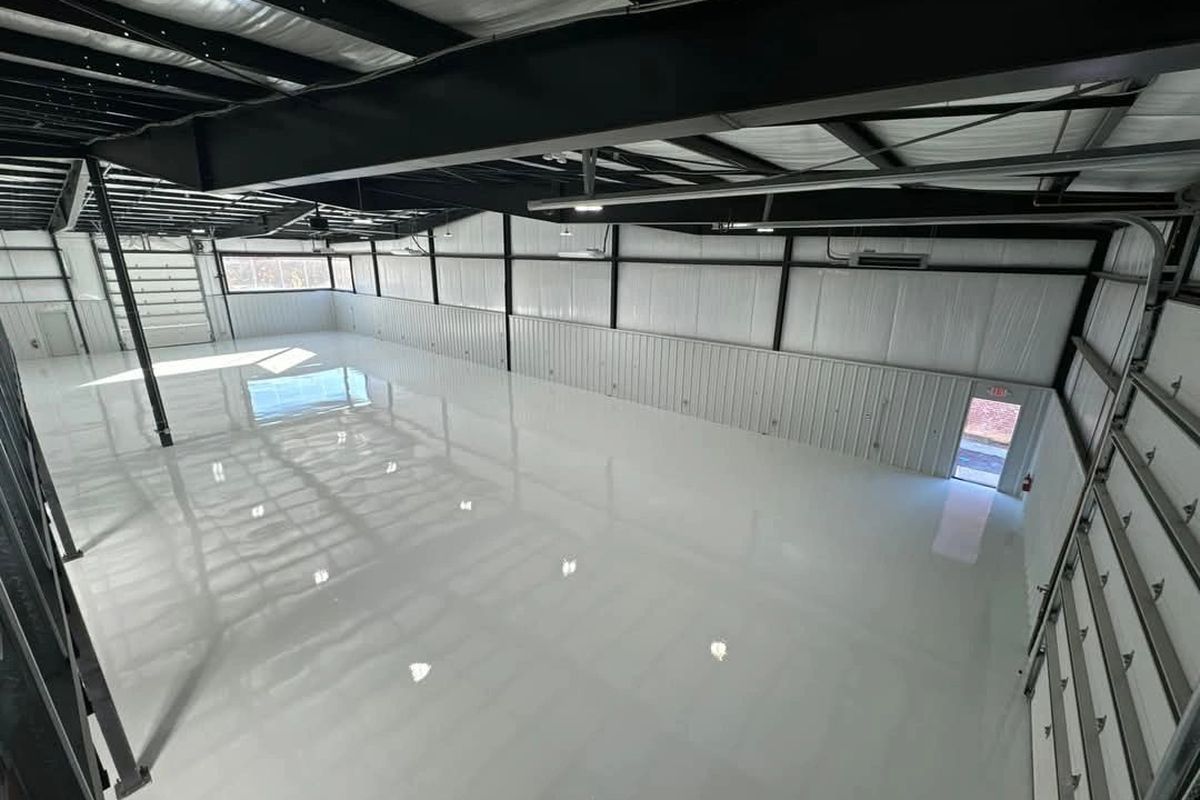
The photo is an example finish, not a documented Kennesaw job.
A clean-looking slab can still have curing compounds, oil, old sealer, or weak surface paste that blocks a coating from bonding. In Kennesaw’s newer homes, ask whether the concrete has been checked for these conditions before the crew settles on a system. Preparation should match the slab, not just the color and flake choice.
A moisture check is different from looking for damp spots. Calcium chloride testing estimates moisture vapor emission at the surface; in-situ relative humidity testing measures conditions inside the slab. They are not interchangeable. The contractor should identify the test method, explain the result, and compare it with the selected coating’s limits before installation.
Diamond grinding removes surface contamination and creates a consistent mechanical profile for bonding. Acid etching is less controlled and may leave residue or an uneven profile, so it is not a substitute for grinding where the system calls for mechanical preparation. Ask what concrete surface profile, or CSP, the coating requires and how the crew will verify it.
Cracks and joints need their own plan before the floor is coated. A stable crack may be filled and blended, while a moving crack can reflect through a rigid finish. Control joints are intended to accommodate movement; filling or coating across them without a detail can lead to splits. Ask which lines will remain visible and how each will be treated.
A coating is a sequence, not a single bucket of material. A typical flake floor may use a primer, a pigmented base coat, broadcast flake, and a clear protective top coat. Each layer needs compatible materials and the right coverage. Ask the contractor to describe the layers, the role of each one, and what happens if the slab needs extra repair.
Hot tires can soften or pull at a coating that has not bonded well or has not fully cured. The garage’s temperature, slab condition, and product limits all matter. A crew should explain the application and cure conditions it will monitor, along with the time before foot traffic, vehicle traffic, and cleaning. Do not treat a walk-on time as permission to park.
If sunlight reaches the garage floor through an open door or windows, ask about the top coat’s UV stability. Some epoxy finishes can amber with exposure; a UV-stable polyaspartic or polyurea top coat may reduce that change, depending on the system. For traction, discuss the texture and amount of slip-resistant additive, especially if water or clay regularly gets tracked inside.
A basement has different priorities from a working garage: moisture testing and vapor limits deserve close attention, and decorative appearance may matter more than tire resistance. In a shop, traffic, dropped tools, chemical exposure, and cleaning methods guide the build. Tell the installer how the space is used so the proposed finish and texture are not chosen by appearance alone.
Ask which method will be used, where measurements will be taken, and what limit applies to the proposed system. Calcium chloride and in-situ relative humidity tests assess moisture differently. A useful answer connects the actual readings to the coating manufacturer’s requirements and explains whether the slab needs further evaluation.
It can make some repaired cracks less noticeable, but a coating cannot guarantee they will stay hidden if the concrete moves. Control joints may need to remain visible or receive a specific flexible detail. Ask the contractor to mark these areas before work and explain the expected finished appearance.
Ask how the crew will remove contaminants and create the required surface profile, and whether it will inspect the slab after grinding. The surface should be ready for the selected system, not merely look dusty or rough. The contractor should also explain how dust will be controlled before coating begins.
In many flake systems, the clear coat protects the decorative layer and provides the final wear surface. Its thickness, texture, and UV behavior affect maintenance and appearance. Ask what the specified top coat does, whether slip resistance is included, and how the crew will confirm even coverage.
Use the coating maker’s cure guidance rather than assuming that the floor is ready once it feels dry. Ask for separate instructions for light foot traffic, parking, wet cleaning, and exposure to cleaners. Until the stated cure period has passed, avoid dragging equipment or washing the surface.
Tell us about the floor in Kennesaw. A photo and a rough size are enough to start a written estimate. No street address on our side — local pros come to the slab.
Atlanta Epoxy Floors is an independent referral service that connects you with local epoxy flooring pros.
 ATLANTA